• Know what happens before, during, and after installation. A new water heater starts with a system check, then moves into safe removal, setup, connection, and testing. Understanding the full process helps us avoid delays and spot problems early.
• Avoid the DIY mistakes that cause leaks and safety issues. Common errors include skipping measurements, leaving utilities on, draining the tank the wrong way, and rushing the final test. These mistakes can lead to damage, unsafe operation, or extra repair costs.
• Get clear answers to the most common installation questions. Homeowners often want to know how long the job takes, whether a new type of heater is possible, and when replacement is the better choice. Straight answers make it easier to plan and choose the right next step.
Why Water Heater Work Can’t Wait
A failing water heater can turn a normal day into a stressful one fast. When hot water runs out, leaks start, or strange noises grow louder, the problem often gets worse if we wait. In San Juan Capistrano, September still feels like summer heat, so a reliable system matters even more when we are already dealing with warm days and busy routines.
If the tank is old or the hot water is not keeping up, the issue may be bigger than a simple fix. That is why water heater installation process explained matters for homeowners who want clear answers before the system gives out. For help with the right setup, our water heater services can make the next step easier.
A new unit is not just about comfort, because it also affects safety, water use, and daily timing. When we know what to expect, we can plan for the work and avoid surprises during the install. That kind of preparation helps keep the whole process smooth from start to finish.
What Happens During Installation
The first part of the job is checking the space, the old unit, and the hookups that feed it. We need to know whether the tank is gas or electric, how much room is available, and what parts must be changed. A good plan helps prevent delays and lowers the chance of errors during the swap.
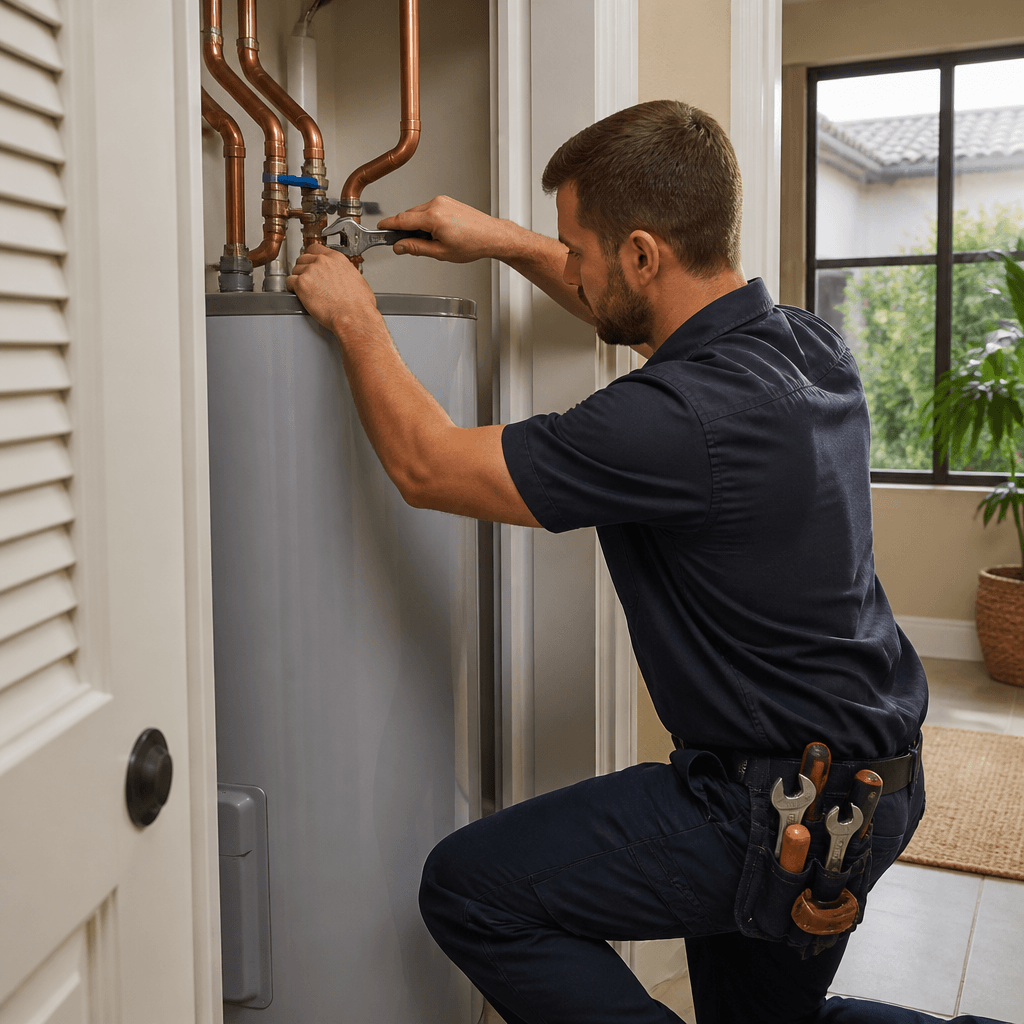
Next, the old water heater is shut off, drained, and removed with care. New piping, valves, and venting may be needed before the new unit is set in place and tested. When we follow the right order, the system is more likely to work safely and deliver hot water when needed.
Step-by-Step Installation Guide
🔍 Step 1: Check the old system
We start by looking at the current water heater, its age, and any signs of wear. This helps us see whether the problem is repairable or if replacement makes more sense.
📏 Step 2: Measure the space
We check the height, width, and clearance around the unit before any work begins. This is important because the new heater must fit safely and allow room for access and service.
🔌 Step 3: Shut off power or gas
We turn off the energy source before touching the unit. This step lowers risk and keeps the job safe while the old heater is being removed.
🚰 Step 4: Drain the tank
We empty the old tank so it can be taken out without spills or damage. Draining also helps reduce strain during removal and makes the space safer to work in.
🛠️ Step 5: Remove the old unit
We disconnect the lines and move out the old heater carefully. This clears the way for the new system and lets us inspect the area for any needed updates.
📦 Step 6: Set the new heater in place
We position the replacement unit in the correct spot and make sure it is level. A steady setup helps the system work properly and keeps stress off the connections.
🔗 Step 7: Connect pipes and venting
We attach the water lines, gas line or electrical hookup, and venting if needed. These connections must be secure because they are key to safe and reliable operation.
✅ Step 8: Test the system
We fill the tank, restore power or gas, and check for leaks or other issues. Testing confirms that the new heater is working as it should before the job is complete.
Common DIY Mistakes to Avoid
Many homeowners want to save time or money by handling this work themselves. The problem is that even small mistakes can lead to leaks, poor heating, or safety issues. Knowing what goes wrong most often can help us avoid bigger trouble later.
⚠️ Mistake 1: Skipping the planning step
This happens when someone starts removing the old heater before checking size, hookups, or needed parts. It usually happens because the job looks simple at first, but the new unit may not match the old setup. We can prevent this by measuring carefully and confirming what the installation needs before starting.
❌ Mistake 2: Forgetting to shut off utilities
This is when power or gas stays on during removal or hookup work. It often happens because the focus is on moving fast instead of staying safe. We prevent it by turning off the correct source first and checking that it is fully off before touching anything else.
🚫 Mistake 3: Draining the tank the wrong way
Some people rush the draining step or leave water behind in the tank. This can happen when they do not know the right order or do not allow enough time. We avoid it by letting the tank empty fully before removal so the unit is easier to handle and less likely to spill.
⚠️ Mistake 4: Improper pipe or vent connections
This mistake means the water lines, gas lines, or venting are not secured the right way. It often happens when someone is comfortable with basic tools but does not fully understand the system. We prevent it by checking every connection carefully and making sure each part is fitted for the heater being installed.
❌ Mistake 5: Skipping the final test
This is when the new heater is turned on without checking for leaks, warm water flow, or strange sounds. It happens because people are eager to finish and assume the job is done once the unit is in place. We can prevent this by testing the system step by step before calling the work complete.
Frequently Asked Questions
How long does a water heater installation usually take?
Most standard water heater installations take a few hours, but the exact time depends on the setup and whether any parts need to be updated. The water heater installation process explained in simple terms includes removal, placement, connection, and testing, and each step must be done in order. If the old unit is hard to access or the hookups need changes, the job can take longer.
Do I need to replace the old water heater with the same type?
No, you do not always need to replace it with the same type. The right choice depends on your space, energy source, household use, and existing connections. A like-for-like swap is often simpler, but some homes may benefit from a different style if the layout allows it.
What are signs that I need a new water heater?
Yes, there are clear signs that replacement may be needed. These include rust-colored water, leaks around the tank, weak hot water, odd noises, or a unit that is near the end of its life. If several of these issues show up together, replacement is often the better choice than another repair.
Can I install a water heater myself?
Yes, it is possible in some cases, but it is not a simple weekend task for most homeowners. The work involves water lines, power or gas, venting, and safety checks that must be done correctly. A mistake can lead to leaks, damage, or unsafe operation.
Why is professional installation worth it?
Professional installation is worth it because it helps ensure the heater is set up safely and works the way it should. Experts know how to handle the connections, testing, and fit of the unit without guesswork. That can save time, reduce stress, and lower the chance of problems after the job is finished.
Final Thoughts on a Safe Install
A new water heater should give us steady hot water and peace of mind, not stress and confusion. When we follow the right steps, the job is safer, cleaner, and more likely to last. That is why understanding the process matters before making a choice.
If we notice warning signs early and plan the work the right way, we can avoid bigger repair issues later. In a warm place like San Juan Capistrano, it helps to stay ahead of home needs before the season changes again. For more updates from our team, follow us on social media.