
20–30%
Of conditioned air lost through a typical leaky residential duct system
Your ac isn’t the problem — your ducts might be. Your ac unit gets blamed for everything — but in southern california, ductwork is often the real culprit behind rooms that won’t cool, systems that run constantly, and utility bills that keep climbing through summer. Orange county’s combination of hot inland heat, aging housing stock, and year-round ac demand makes leaky or poorly performing ducts an especially costly problem. These five signs tell you your ductwork is hurting your ac before it becomes a full system failure.
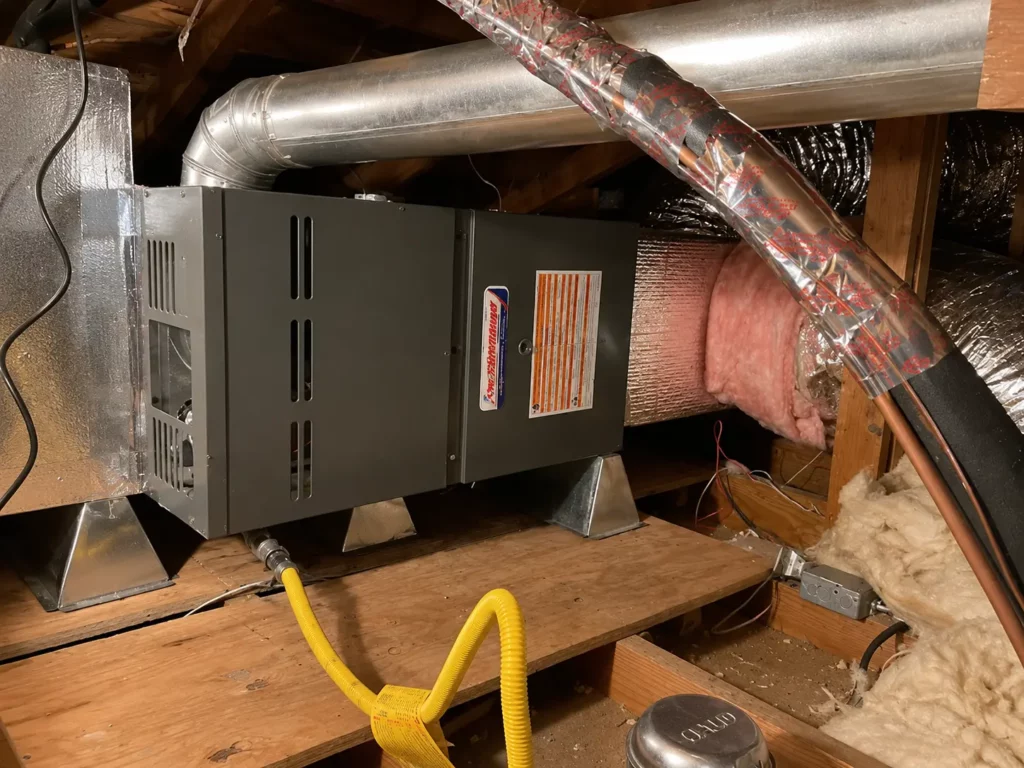
Of conditioned air lost through a typical leaky residential duct system
Peak OC attic temperature in summer — ductwork must withstand extreme heat
Maximum duct leakage allowed by California Title 24 on new installations
Faster AC compressor wear caused by inefficient ductwork and longer runtimes
Conditioned air escaping through duct leaks costs money before it reaches any room
In Orange County, where AC runs June through October, even a 20% duct leakage rate translates directly into hundreds of dollars of wasted cooling cost per season. Leaky supply ducts dump conditioned air into attics and wall cavities instead of rooms — forcing your system to run longer cycles and driving utility costs up without any improvement in comfort. If your bills rise faster than your usage warrants, ductwork should be the first thing a technician checks.
Uneven temperatures across a home are almost always a duct problem, not an AC problem
When supply ducts are leaking, crushed, disconnected, or undersized, some rooms simply don't receive enough airflow to overcome their heat load — especially bedrooms and sun-exposed rooms during peak afternoon heat. OC attics routinely reach 140–150°F in summer, and any duct running through that space that isn't fully sealed and insulated is actively working against your AC's cooling output.
Unsealed return ducts actively pull unfiltered attic air into your living spaces
Leaky return ducts create negative pressure that draws unconditioned air — along with attic dust, insulation fibers, and outdoor allergens — directly into the air stream before it reaches your filter. Orange County's dry climate and seasonal Santa Ana wind events mean outdoor particulate loads are already elevated. Compromised return ductwork bypasses your filtration entirely, distributing contaminants to every room with every AC cycle.
Duct noise is your system telling you airflow is restricted or connections have failed
Whistling from vents signals undersized ducts or blockages creating excessive static pressure — your AC is working harder to push air through too small an opening. Rattling indicates loose sheet metal or disconnected flex duct sections vibrating under pressure. Banging when the system starts is duct expansion from pressure surges — in older OC homes, this frequently signals duct material separating at seams and approaching full disconnection.
Duct leaks introduce unconditioned humid air that your AC cannot efficiently remove
AC systems remove humidity as a byproduct of cooling. When return ducts leak, they draw in unconditioned outdoor air — including marine layer moisture from coastal OC zones or Santa Ana wind dry air from inland — before the air reaches the evaporator coil. This disrupts the dehumidification cycle, leaving homes feeling uncomfortable at temperatures the thermostat says should feel fine. Humidity imbalance is one of the least obvious signs of duct failure.
Ductwork running through uninsulated OC attics
absorbs extreme radiant heat. Even sealed ducts in
these conditions can transfer significant heat load
into supply air — the insulation spec matters as
much as the sealing.
Many OC homes built in the 1960s–1980s still have
original fiberglass duct board or early flex duct.
These materials degrade significantly after 25–30
years — cracking, separating at joints, and losing
R-value.
Santa Ana conditions drive fine outdoor particulate
through every gap in the building envelope. Leaky
return ducts actively pull this air into your HVAC
stream, bypassing filtration and circulating it
throughout the home.
When leaky ducts force an AC system to run longer
cycles to compensate for lost airflow, compressor
run hours accumulate faster. A system that should
last 15 years can fail in 10–11 years with chronic
duct inefficiency.
OC homes run AC 8–10 months annually. A 20%
duct leakage rate that might cost $200/year in a
seasonal climate can cost $600–800/year here —
the penalty compounds with every month of AC
operation.
California's Title 24 energy code mandates duct
leakage testing on new installs and replacements,
with a maximum of 6% leakage. Most older OC
homes test at 20–40% — well above code and a
significant ongoing efficiency penalty.